
Why Career Fairs Feel Overwhelming (And What to Do About It)
Career fairs feel overwhelming when you lack clarity. Here's how to create a plan before you go—so conversations actually lead somewhere.
2/11/20263 min read
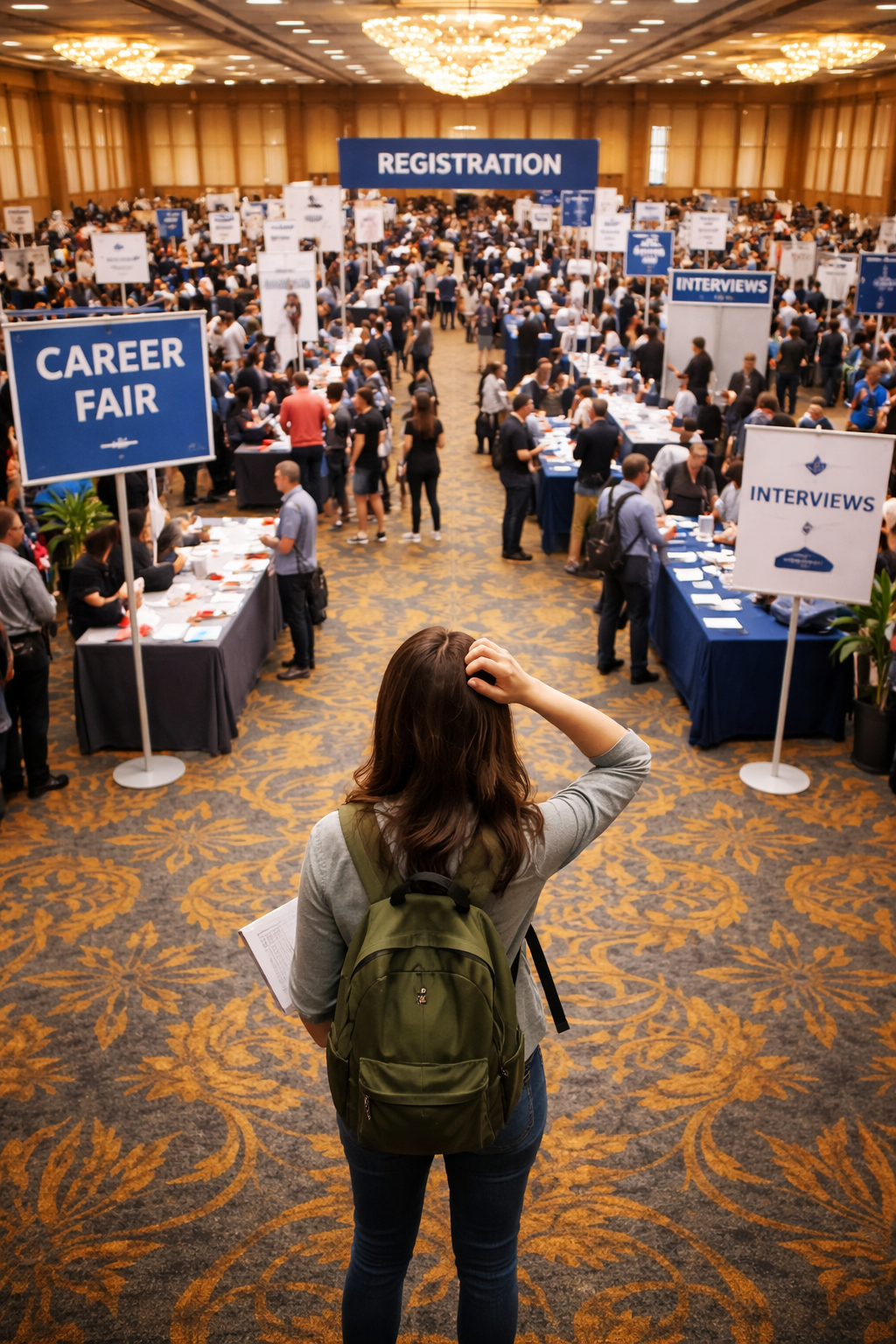
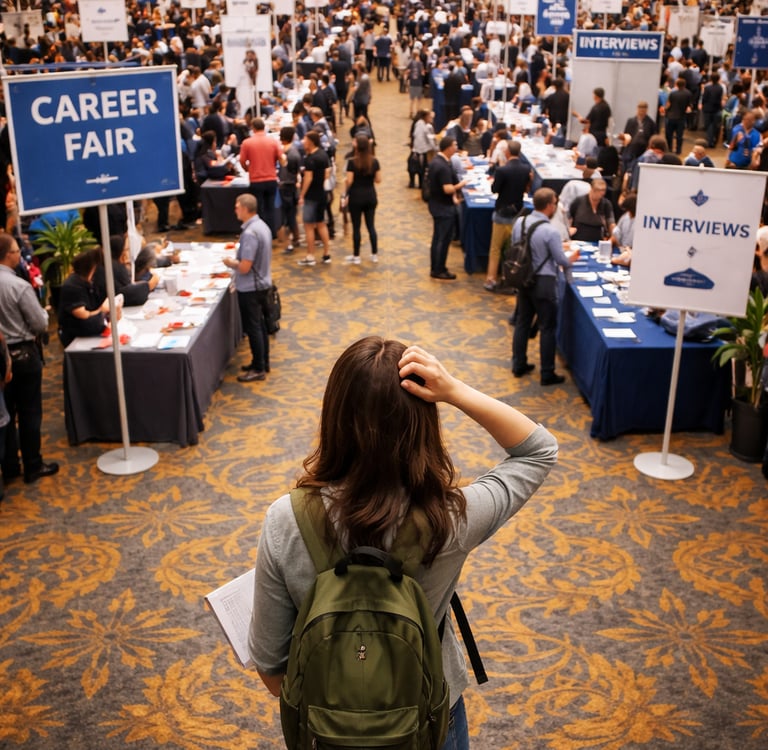
Many years ago after leaving the Army I was looking for a job and decided to attend a career fair that was put on by a regional chamber of commerce organization. I entered this small convention center and there were a lot of tables. I knew I needed a job, but had no idea what companies were there, what positions they were hiring for, let alone what position I was interested in. I visited a few tables, met with several employers, picked up my swag, and moved to the next section. Conversations started to blur, logos started to meld together. By hour two, I had a haul of business cards and free pens, and I could recite my 30-second pitch without even thinking about it. The problem was I lacked clarity and had no plan.
When you don't know what you are looking for, every opportunity begins to sound eerily similar. Job descriptions start to all sound the same, as many companies use the same generic language for many varying positions. It's difficult to distinguish between companies and positions when you don't have set criteria to evaluate them.
Career fairs average 200+ employers. That's overwhelming by design—unless you show up with a filter. You're trying to figure out what you want while you're networking. That's like going to the grocery store hungry without a list—you leave with random stuff that doesn't make a meal. (we've all been there.)
Career fairs are great for networking. They are not great for finding a job when you have no plan or clarity on what you are looking for. Having the same conversation with 50-60 employers is not the same as having 15-20 real conversations with employers whose mission you find thrilling or are advertising a program that resonates heavily with you.
Here are three things to help create your plan before your next career fair:
1. Explore Your Interests First (Not Job Titles)
Don't start with "what jobs are out there." Start with "what problems do I want to solve? What activities energize me? What topics do I lose track of time learning about?"
Career fairs become overwhelming when you're evaluating 200 companies against no criteria. When you know you're interested in environmental sustainability or creative problem-solving, suddenly most booths become irrelevant—and the right ones become obvious.
2. Know Your 3 Questions
Generic conversations happen when you ask generic questions ("What positions do you have?" "What's the culture like?"). Prepare three questions that actually help you evaluate fit:
- Questions about the work itself (What does a typical project look like? What problems is your team solving right now?)
- Questions about growth (What do people in this role typically move into? How do you support early-career development?)
- Questions about your specific interests (I'm interested in digital marketing—how does that show up in this role?)
When you ask better questions, you get better conversations—and you stand out from every other student or potential candidate asking "Are you hiring?"
3. Create Your "Short List" Before You Arrive
Review the employer list ahead of time. Identify 5-7 companies you're genuinely curious about—not because they're big names, but because something about their work aligns with what you've already clarified about yourself.
This changes everything. Instead of trying to hit 40 booths with watered-down energy, you have focused conversations with companies that actually matter to you. You have time to ask follow-up questions. You leave with real connections instead of a pile of business cards and those turn to real networking opportunities.
The goal isn't to impress everyone. It's to gather information that helps you move forward. Some conversations will confirm your interests. Others will rule things out. Both are valuable.
The next career fair on your calendar doesn't have to feel like the last one. But nothing changes if you show up the same way.
Before you walk into that crowded banquet hall or convention center again, ask yourself: Do I actually know what I'm looking for?
What would change if you walked in knowing exactly who you wanted to meet and what conversation you wanted to have?
Speaking of conversations, if you want clarity before your next fair, your next evaluation, or your next pivot, I offer complimentary 15-minute Compass Calls. No pitch—just a chat about where you are and what direction might be worth exploring.
Contact Us
Subscribe to our newsletter for insights & reflections to help you stay inspired on your journey.
Discover Your Direction
Find your passion, find your path.
© 2025 Discover Your Direction LLC